
Deeptech: getting communications right from prototype to market
 By Cécile Biedermann, Biedermann Advisory
Between demonstrating a prototype and bringing it to market, the audiences change, and so does the evidence they ask for. A deeptech company’s story has to keep pace with this shift.
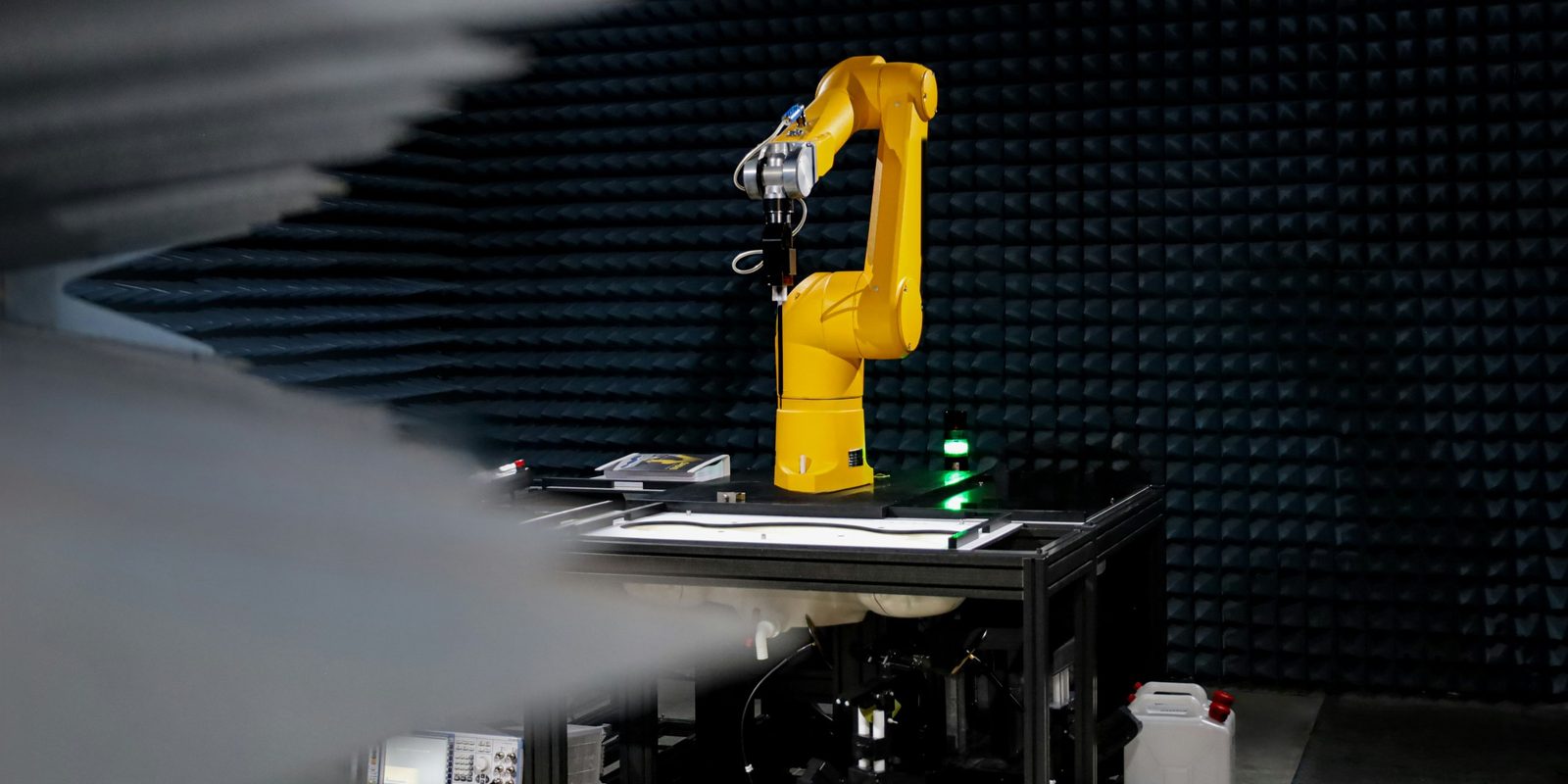
Photo: Guille B, Unsplash
Picture a first meeting with the purchasing director of a major industrial group. The founder has polished her slides to highlight a record technical performance, three publications in scientific journals and an innovation award. She is proud of them, and rightly so. Ten minutes in, though, the buyer asks a very different question: “How many units can you deliver in 2028, and what happens if your main supplier lets you down?” The answer is on none of the slides. The silence that follows says a lot.
When you move from demonstrating a prototype (TRL 6) to market launch (TRL 9), you are no longer taken at your word on the science. You are judged on your ability to produce and deliver.
This scene is playing out more and more often, and for good reason. France now has 2,830 deeptech start-ups, young companies born from scientific research. They generate €5.4 billion in revenue and employ 50,000 people. Many have proved that their technology works. What they still have to prove is that they can produce it, deliver it, and last.
And this is exactly when money gets scarcer. Bpifrance is calling for more private investors in Series A and B rounds, the first large funding rounds after seed, and for other funders to take over afterwards. Just when the company needs to convince new audiences, it has less room for error.
Ynsect’s liquidation at the end of 2025 made these expectations more pressing. The French insect-protein pioneer had raised some $600 million, including around €148 million of public money, for a giant plant near Amiens that the head of Bpifrance himself called a mistake. Since then, private investors have become more selective about profitability and the sequencing of industrial projects, and the use of public money in such bets is increasingly questioned, all the way to the French National Assembly.
Three stages, three different proofs
A technology’s maturity is measured on a nine-level scale called TRL (Technology Readiness Level). It does not judge the quality of the science but measures how far the project has come between the idea and the commercialised product. It falls into three broad phases: research (TRL 1 to 3), development (TRL 4 to 6) and deployment (TRL 7 to 9). In the life of a deeptech company, three stages on this scale change everything.
The demonstrator is a prototype first tested in conditions close to reality (TRL 6), then integrated and validated in real conditions (TRL 7). It proves that it works. Next comes the complete, qualified system (TRL 8), which goes through its final tests before market launch. For an industrial deeptech company, this is often the time of the first plant: a first industrial production unit, built after the prototype phase. For other deeptech companies, this stage takes other forms: CE marking for a medical device, flight qualification for a satellite or the conformity assessment of a high-risk artificial intelligence system. In every case, it proves that you can produce, and do so in compliance. The commercialised system (TRL 9), finally, is available on the market, manufactured in volume for paying customers. It proves that you can deliver, and last.
New audiences, new expectations
As long as the technology is at the demonstrator stage (TRL 6 and 7), a deeptech company mostly talks to laboratories, public funders and investors used to technological risk. They judge performance, a breakthrough, a scientific team. They are, in a way, audiences from the same family.
When the company moves beyond this stage to prepare its first plant, and then market launch (TRL 8 and 9), new people arrive who do not speak that language: major industrial customers and their procurement teams, banks, the elected officials hosting the site, residents, the production engineers to be hired. None of them buys a laboratory innovation. They don’t just buy a technology: they choose a partner who will still be there in ten years.
What they want to see is therefore very concrete:
- a quantified return on investment for the customer: what the solution helps them earn or save, and how quickly;
- credible production capacity, with volumes, lead times and a unit cost, rather than a performance record;
- financial strength, and a clear answer to the question “what happens if the next funding round is delayed?”;
- a credible path to profitability for the first plant, for the banks and investors taking over;
- a controlled supply chain, with its critical suppliers and fallback options;
- people who have already produced, delivered and met quality commitments;
- a site its region wants rather than endures.
They also want reassurance on compliance. European regulations, environmental permits, sector standards: often heavy for a new technology, these requirements weigh as much as performance. And when industrial sovereignty becomes a purchasing criterion, claiming it is no longer enough. You have to show where the components come from, where you produce, and who you depend on.
Costly mistakes
Volocopter offers a recent example. This German pioneer of electric flying taxis had chosen, with Aéroports de Paris, the best possible showcase: flying passengers over Paris during the 2024 Olympic Games. The promise is repeated publicly, even though the aircraft has not yet obtained its European certification, the step that precedes any market launch. In Paris, city councillors, from the majority and the opposition alike, see it as nothing more than a gadget for the privileged and an “ecological aberration”. The City takes the authorisation to court. Without certification in time, not a single passenger takes off over Paris during the Games. At the end of December 2024, having failed to find new funding, Volocopter files for insolvency.
The technology could fly. But the date had been promised to the whole world before it was achievable, and the host territory had never been won over.
The early-story trap
These mistakes often share the same cause: continuing to speak with the message that helped raise the first funds. Publications, awards, records, a spectacular vision: this story worked with investors, so it is natural to hold on to it. But with an elected official, a resident or an industrial buyer, it has the opposite effect. The flying taxi that made investors dream became, for Paris city councillors, a gadget for the privileged. Where the investor hears “breakthrough”, the buyer hears “risk”.
Timelines announced too early make the misunderstanding worse. A date set to make an impression, then missed, leaves a lasting trace. When the time comes to sign a first major contract, that is often what the customer finds.
Why this is first and foremost a communications matter
None of this is solved in a business plan. Industrial proof often exists long before anyone knows about it: a signed supply contract, a production engineer hired, a first batch delivered without defects. It only carries weight in the decision of a buyer, a bank or an elected official if it reaches them, at the right time and in their language. That is the role of communications at this stage.
In practice, it starts with deciding what to say, to whom, and in what order. The team first, then local officials and the prefecture, residents, customers, and only then the press. A first plant announced in the newspapers before it has been explained to the town starts with a handicap. When the time comes, you have to make people dream: a first plant means jobs, a region being transformed, an industry being built. But that dream has to rest on what is true. An overly ambitious timeline, which will later have to be corrected in public, costs more than it ever brought in.
Announcing a move to scale: in what order?
- The teamShare the same message
- Local officials and the prefectureMake them allies of the project
- Residents and local associationsAnticipate concerns and reassure
- Customers and partnersGive visibility on the timeline
- The pressTell the story from each outlet’s angle
It also means preparing those who speak. The founder does not address a purchasing director the way she addresses a scientific committee. The future plant manager will be, far more than she is, the residents’ point of contact. Everyone needs to know what they can assert, what they should qualify, and what they keep to themselves.
Finally, it means aligning every channel and keeping an ear to the ground. The website, the investor deck, the answers to tenders and the posts on LinkedIn must tell the same story: a buyer who compares your deck with your funding press release should read the same thing in both. A local article, an emerging petition, a question that keeps coming up among customers are all weak signals. Spotting them early makes it possible to respond before the issue takes hold.
Changing the story as you change scale
Changing the story does not mean disowning your science. It means translating it: a technical yield becomes a production cost, a performance becomes reliability, a prototype becomes a delivery schedule, and a technological breakthrough becomes a return on investment for the customer.
This new story is aimed first at the inside. Getting long-standing researchers, who value exploration, to work alongside new plant managers, who value process and repeatability, is often the leader’s first narrative challenge. Some fear losing the company’s soul, others fear not being heard. If the team does not share the same story, customers end up hearing two messages.
Scaling up is a change of identity: a team of researchers becomes a reliable supplier. Companies that anticipate this shift approach their first major contracts with a story ready. The others build it in a hurry, watched by customers who are already hesitating.
Sources
- Maddyness, “La France se rapproche des 500 startups deeptech créées chaque année” (March 2026, Bpifrance figures)
- French Ministry of Higher Education and Research, “L’échelle TRL” (Horizon Europe)
- Euromed Innovation Center, “Maturité technologique (TRL) : à quel stade se situe votre projet deeptech ?” (November 2026)
- Bpifrance, France 2030 “Première Usine” call for projects, programme description (February 2026)
- ANSM (French medicines and health products agency), “Certification des dispositifs médicaux : un deuxième organisme notifié européen pour la France”
- European Space Agency, “Technology Readiness Level” (ISO 16290 standard)
- European Commission, AI Act Service Desk, Article 16 of the AI Act
- Journal du Geek, “Les taxis volants de Volocopter survoleront bien Paris pendant les JO” (April 2024)
- L’Info Durable with AFP, “JO-2024 : pas de taxis volants à Paris pendant les Jeux, faute de certification” (August 2024)
- L’Info Durable with AFP, “JO : le gouvernement donne son feu vert aux taxis volants à Paris” (July 2024)
- Next, “JO 2024 : le ministère de la Transition écologique et des Transports autorise les taxis volants” (July 2024)
- The Connexion, “Flying taxis for Paris 2024 Olympics meet council opposition”
- FlightGlobal, “Volocopter enters insolvency following cash shortfall” (December 2024)
- NewMobility, “Flying cabs won’t get airborne in Paris this year” (December 2024)
- Maddyness with AFP, “Ynsect, liquidée en décembre, a bénéficié d’environ 148 millions d’euros d’argent public” (January 2026)
- L’Usine Nouvelle, “Ynsect, Northvolt… Les leçons à tirer de la déroute de start-up pourtant prometteuses”
- Wilco, “Financer sa startup industrielle : activer les bons leviers dès l’amorçage”
- French National Assembly, written question no. 13428 on the liquidation of Ynsect (March 2026)
Cécile Biedermann
Communications director · 15 years’ experience · Biedermann Advisory